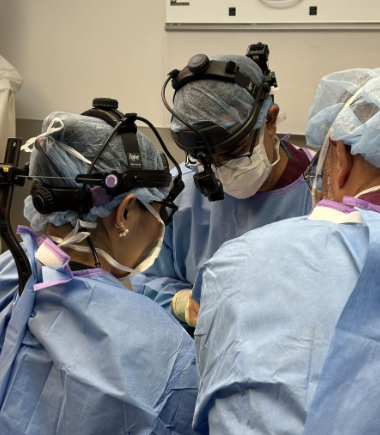
Understanding the Postural Demands of Microscope Use
Microscope-based procedures require a high level of precision and visual stability. Because of this, clinicians must maintain a very consistent head position relative to the eyepieces. Small deviations in posture can affect visibility and accuracy, so movement is often minimized.
This creates a unique ergonomic challenge. While the upper body may remain relatively still, the neck and upper back are continuously engaged to support the head in a forward or angled position.
Even when the setup feels optimized, the cervical spine is still responsible for maintaining that alignment throughout the entire procedure. Over time, this sustained effort can contribute to fatigue in the neck and shoulders, especially during longer cases.
This type of strain is often cumulative. It does not always present immediately, but builds gradually as procedures continue throughout the day.
Why “Good Setup” Alone Does Not Eliminate Strain
Many clinicians focus on optimizing microscope setup as the primary way to improve posture. This includes adjusting chair height, aligning the microscope angle, positioning the patient correctly, and ensuring visual clarity through proper ergonomics.
These adjustments are important and form the foundation of a good clinical setup. They help reduce unnecessary strain caused by poor positioning or awkward angles.
However, even in a well-optimized setup, the fundamental demand remains the same. The clinician must still hold their head in a fixed position for extended periods. This means the neck and upper back continue to carry the load required to maintain alignment.
In other words, setup improvements help reduce postural inefficiency, but they do not eliminate the need for sustained muscular support during the procedure itself.
This is where many clinicians still experience fatigue, even when they follow best-practice ergonomic positioning.
The Role of Cervical Spine Load in Microscope Work
One of the most important factors in microscope-based posture is cervical spine load. This refers to the amount of physical effort the neck muscles must exert to hold the head in a fixed position over time.
When the head is held forward or angled downward, the muscles in the neck and upper back must work continuously to maintain stability. The longer this position is held, the more fatigue accumulates in those muscle groups.
Even small adjustments in head angle can influence the amount of strain placed on the cervical spine. Over the course of a long procedure, this repeated demand can lead to noticeable fatigue and reduced endurance.
This is especially relevant in high-precision environments where maintaining stillness is essential for accuracy and control.
How NekSpine Supports Microscope-Based Work
NekSpine was designed to provide direct cervical spine support during long, static procedures where posture cannot easily change. Instead of relying only on environmental adjustments, it introduces a support point for the neck and head during use.
This support helps reduce the amount of muscular effort required to maintain posture under sustained load. Rather than forcing the clinician to hold their head in place constantly, NekSpine helps maintain alignment throughout the procedure.
This does not change the clinician’s technique or workflow. It works alongside existing positioning habits, helping make those positions easier to sustain over time.
By reducing the continuous effort required from the neck and upper back, NekSpine supports a more comfortable and consistent posture during microscope use.
Setup Still Matters: Aligning Workflows for Comfort
Even with cervical support, proper setup remains an important part of ergonomic microscope use. The goal is not to replace good positioning, but to combine setup optimization with direct support.
Key elements of microscope setup include:
- Proper chair height alignment with the working field
- Stable patient positioning for visual access
- Balanced microscope angle to reduce unnecessary tilt
- Neutral shoulder positioning where possible
- Consistent monitor or visual alignment when applicable
These adjustments help create a stable working environment. When combined with cervical spine support, they contribute to a more sustainable posture during longer procedures.
The combination of setup and support is what allows clinicians to maintain precision without excessive physical strain.
Why Static Work Leads to Cumulative Fatigue
One of the defining characteristics of microscope-based procedures is stillness. While stillness is necessary for precision, it also limits the body’s ability to reset naturally.
In dynamic tasks, movement allows muscles to shift and recover. In static tasks, the same muscle groups remain active for extended periods without relief. Over time, this creates cumulative fatigue in the neck and upper back.
This is why clinicians often notice discomfort not during the procedure itself, but after multiple procedures or at the end of a long clinical day.
The accumulation effect is important to understand because it explains why even well-positioned setups can still lead to fatigue over time.
Supporting Endurance in Long or Repeated Procedures
In clinical environments where multiple microscope-based procedures are performed in a single day, endurance becomes an important factor.
Each procedure adds a small amount of physical load to the cervical spine. While this may not feel significant individually, the repeated exposure creates a layered effect throughout the day.
By reducing the effort required to maintain posture during each procedure, NekSpine helps support overall endurance across multiple cases. This can contribute to a more consistent physical experience throughout the clinical schedule.
Rather than focusing solely on individual procedures, this approach accommodates the cumulative demands of a full working day.
Integrating Support Into Clinical Practice
One of the key considerations in any clinical support tool is how easily it fits into existing practice. If a solution requires major workflow changes, it becomes difficult to adopt consistently.
NekSpine is designed to integrate into existing surgical and clinical environments without requiring changes to procedural technique. It supports the posture clinicians already use during microscope work.
Because it is adjustable, it can be adapted to different working styles, setups, and procedural requirements. This allows it to be used consistently across different cases without disrupting workflow.
The goal is to provide support that feels natural within the existing clinical environment rather than introducing additional complexity.
Rethinking Microscope Ergonomics
Microscope ergonomics is often approached through positioning alone, focusing on chair height, equipment alignment, and visual setup. While these factors are important, they only address part of the challenge.
The missing element in many ergonomic approaches is support during the procedure itself. Even with ideal positioning, the body is still responsible for holding posture under continuous load.
By introducing cervical spine support during use, NekSpine expands the concept of ergonomics beyond setup and into active physical support.
This allows clinicians to maintain better alignment without relying solely on muscular effort.
Moving Beyond Setup Alone
Optimizing microscope setup is an essential step in improving clinical ergonomics, but it does not fully eliminate the physical demands of sustained posture.
The neck and upper back remain actively engaged throughout long procedures, even in well-adjusted environments.
NekSpine is designed to complement setup optimization by addressing the physical load directly during use. This creates a more complete approach to posture support that includes both environmental alignment and active cervical support.
For clinicians working in microscope-based environments, this combination can help improve comfort, reduce fatigue, and support more sustainable long-term clinical performance.
Get more information on NekSpine and see how ergonomic support can be integrated into dental hygiene workflows to help reduce fatigue and support long-term clinician comfort.