NekSpine for Oral and Maxillofacial Surgery: Postural Demands Across a Varied Procedure Mix
Oral and Maxillofacial Surgery Spans Two Distinct Postural Risk Profiles, and Most Ergonomic Interventions Address Only One
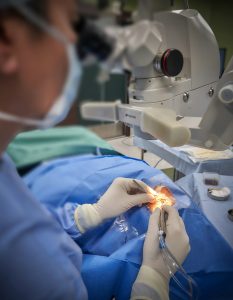
OMFS occupies a unique position in the surgical ergonomic landscape. The specialty performs procedures in both a seated dental operatory configuration and a full OR setting, and the postural demands of those two environments differ meaningfully. Dental operatory work involves sustained lateral rotation and forward flexion, which characterize dental ergonomic risk. OR-based cases, including orthognathic surgery, complex reconstruction, and craniofacial procedures, involve the standing surgical posture profile, with long case durations and dependence on loupe and headlight throughout.
According to a ScienceDirect PRISMA systematic review, which examined cervical musculoskeletal dysfunction in surgeons, cervical muscle strain is most prevalent due to repetitive motions and prolonged static neck positioning, conditions that describe both the seated operatory and the standing OR context in OMFS. Our system addresses the cervical load in both seated and standing positions and works with loupes and headlights, regardless of the procedural context. Request a demo to evaluate fit across your full OMFS procedure mix.
Orthognathic and Craniofacial Cases Produce Sustained High-Angle Cervical Load Over Long Durations
What the Research Shows About Cervical Load During Extended OR Cases
Orthognathic surgery and complex craniofacial reconstruction cases run four to six hours in sustained loupe-dependent positioning with limited opportunity for postural variation. According to Hansraj KK, Surg Technol Int, forward head tilt of forty-five degrees generates forty-nine pounds of effective cervical spine load, compared to ten to twelve pounds in a neutral position. According to Epstein et al., JAMA Surgery, the prevalence of degenerative cervical spine disease among surgeons increased by eighteen point three percent from 1997 to 2015, documenting the long-term consequence of this kind of occupational exposure.
Seated Operatory Work in OMFS Carries Its Own Documented Cervical Risk
What the Research Shows About Dental and Oral Health Postural Demands
Office-based OMFS procedures performed in a seated dental operatory configuration carry the same sustained forward flexion that characterizes dental ergonomic risk. According to a PMC endoscopic sinus surgery meta-analysis, which examined endoscopic sinus and skull base surgery, a specialty that shares postural characteristics with seated oral procedures, the twelve-month prevalence of work-related musculoskeletal disorders was eighty-two percent. According to a ScienceDirect PRISMA systematic review, loupe use was directly associated with cervical dysfunction across surgical specialties, and OMFS practitioners who use loupes in both operatory and OR settings carry that exposure across both environments. Our headlight and loupe compatibility page covers how the system integrates across both settings, and a trial can confirm fit in your specific seated operatory setup.
Headlight and Loupe Dependence Compounds the Cervical Load Across Both OMFS Environments
What Head-Mounted Optical Equipment Adds to the Load the Cervical Spine Already Carries
Loupes and headlights are standard across the OMFS procedure mix regardless of whether the case is office-based or OR-based. According to a ScienceDirect PRISMA systematic review, the use of loupes was directly associated with cervical dysfunction across surgical specialties. According to our published research on our headlight effects page, the added weight of head-mounted optical equipment can increase cervical loading when used alongside forward-flexed working positions. For clinicians who wear both loupes and headlights, understanding how these factors interact may help inform ergonomic decisions. Schedule a demo to evaluate how the system integrates with your specific optical equipment across both settings.
What the Mayo Clinic Study Shows About Passive Support During Prolonged Surgical Procedures
Peer-Reviewed Outcomes Directly Relevant to Long OMFS Cases
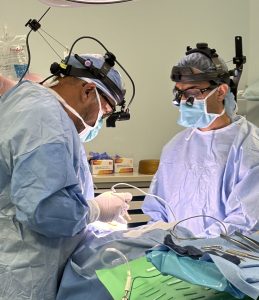
The NekSpine Mayo Clinic study, published in Annals of Surgery, measured outcomes across 12 surgeons in 6 surgical specialties during actual operative procedures. The study found a 56% increase in static endurance time, a 41.7% reduction in neck and shoulder discomfort at 45 degrees of flexion, no compromise in range of motion, and a 91.7% device acceptance rate. The University of Alberta / EWI Works, Sensors, reported up to a 31% reduction in neck muscle activity, as measured by electromyography, during tasks that mimic surgical demands. For OMFS practitioners facing four- to six-hour OR cases with sustained loupe-and-headlight dependence, the 56% increase in static endurance time is the most directly relevant outcome. Both studies are available on our clinical evidence page, and a demo or trial lets you evaluate these outcomes in your specific mix of procedures.
Most Ergonomic Interventions Address Either the Dental or the Surgical Side of OMFS. The Research Supports Addressing Both.
The full procedure mix of an OMFS practice deserves an ergonomic solution built for every position it requires, not one that addresses the OR but ignores the operatory or vice versa. Research highlights the relationship between prolonged static positioning, loupe use, and cervical strain across both standing and seated surgical environments. A ScienceDirect systematic review identified associations between sustained surgical postures and cervical dysfunction, while Mayo Clinic research demonstrated improved static endurance at flexion angles comparable to those experienced in surgical settings. A device designed to support both working environments, combined with proper fitting and evaluation across your typical case mix, can help determine whether passive support addresses your specific postural demands. Request a demo to evaluate fit across your specific procedure mix, or review the clinical evidence on our clinical evidence page.