
Ambulatory and outpatient surgery centers run lean schedules with little margin between cases. Surgeons in these environments perform multiple procedures consecutively, often with fewer support staff and less downtime than hospital OR settings provide. The physical demand this creates isn’t spread across a long day—it concentrates. Neck strain and upper back fatigue that might be manageable across a single long procedure become compounding problems across four, six, or eight back-to-back cases. By the last procedure of the day, a surgeon’s cervical spine has accumulated load that the body cannot fully recover from between patients. NekSpine is designed to reduce that accumulation—procedure by procedure, case by case —so the surgeon who finishes the day’s schedule performs at the same level of precision they brought to the first case.
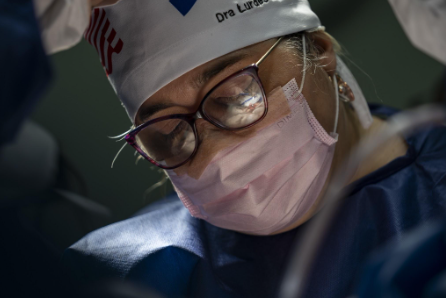
Outpatient surgery concentrates procedural volume into compressed scheduling windows. Efficient case turnover is an operational priority, so the time between procedures is short—often filled with documentation, setup, and communication rather than genuine rest. Postural muscles that held the cervical spine stabilized through the previous case do not return to baseline during these intervals. They remain partly activated, carrying residual tension into the next procedure.
The result is a fatigue pattern that differs from the fatigue a single long procedure creates. A surgeon performing one four-hour case experiences cervical strain that accumulates within that case and resolves with rest afterward. A surgeon performing four back-to-back one-hour procedures in an outpatient setting experiences incremental fatigue that does not fully resolve between cases — so by the third and fourth procedures, the cervical spine is already carrying the accumulated load of everything that came before. Late-day precision, focus, and physical endurance all reflect that accumulated deficit. The multi-case surgical endurance support program addresses this pattern in detail for facilities evaluating department-wide fatigue-management approaches.
NekSpine is a wearable cervical support system constructed from carbon fiber and medical-grade materials. It weighs under 2 pounds and is designed to be worn throughout an operative session. The system consists of three components — a head frame, a support beam, and a vest — that together create a structural path for gravitational force to transfer from the head through the device structure rather than loading entirely onto the cervical vertebrae and surrounding musculature.
In outpatient settings where consecutive cases are the norm, NekSpine’s benefit compounds across the schedule. The reduction in cervical load during the first case means the surgeon enters the second case carrying less accumulated strain. That pattern repeats across the full day. Clinicians using NekSpine in high-volume outpatient environments report meaningfully reduced late-day fatigue and faster post-shift recovery than before they began using the device. The surgeon insights page includes direct practitioner accounts from outpatient settings.
The carbon fiber construction of NekSpine keeps the total system weight well below what would add meaningful load to the surgeon’s torso. A heavy support device would partially offset the cervical load reduction it provides. NekSpine’s material selection prioritizes structural rigidity without adding mass—so the surgeon gains support without added burden. The fit is designed for all-day wear without pressure points or restriction that would prompt removal between cases.
Outpatient surgical environments use the same operative tools as hospital ORs — loupes, headlights, surgical microscopes, robotic consoles. NekSpine’s head frame is compatible with these devices. Surgeons who wear loupes or headlights during procedures do not need to choose between their visual tools and cervical support. The NKS Pro360 surgical headlight is specifically designed to integrate with the NekSpine system for clinicians who want an optimized combined setup.
Outpatient surgery centers employ surgeons across a range of heights, body types, and specialty backgrounds. NekSpine’s three-component adjustability system accommodates the full range of the clinician population. The head frame, support beam, and vest each adjust independently so that each surgeon receives a configuration that positions the contact geometry correctly for their individual anatomy and working posture. A device that does not fit correctly does not reduce load correctly — which is why personalized fitting is part of the NekSpine deployment process. Full detail on the adjustability system is available on the fit and adjustability resource page.
Ready to evaluate NekSpine for your outpatient OR?
Contact NekSpine to schedule a customized demo or clinical assessment — or review the clinical evidence supporting NekSpine.
The primary operational benefit NekSpine delivers in outpatient environments is the reduction of cervical and upper back strain across a multi-case schedule. Each procedure the surgeon performs wearing NekSpine is a procedure during which the cervical spine carries less gravitational load than it would without the device. Across a full day of consecutive cases, that reduction accumulates into a meaningfully different fatigue profile at end of day than the surgeon would experience without it.
Cervical fatigue does not stay in the neck. Musculoskeletal strain under sustained postural load correlates with increased cognitive demand on the systems responsible for focus and fine motor control. A surgeon whose neck muscles are fatigued is also a surgeon whose attentional resources are partly occupied by managing physical discomfort. Reducing cervical load through NekSpine keeps more cognitive and attentional capacity available for the operative task — which is particularly relevant in the later cases of a busy outpatient schedule, when the compounded fatigue effect is greatest.
Surgeons who use NekSpine in consecutive-case environments report that the recovery period between cases and after the full schedule is meaningfully shorter. When the cervical spine carries less load during procedures, it has less to recover from during breaks. Shorter recovery translates directly to operational efficiency in outpatient settings: surgeons who recover faster between cases are better prepared for each subsequent procedure, and surgeons who recover faster after the schedule are better prepared for the following day’s workload.

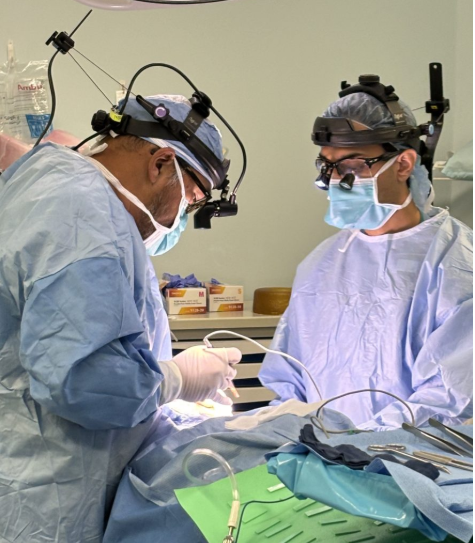
Ambulatory surgery centers depend on surgical volume to sustain their operating model. A surgeon who reduces their schedule volume, takes medical leave for musculoskeletal injury, or leaves the specialty entirely represents a significant disruption to that model. The financial and operational consequences of surgeon fatigue-related career limitation are not hypothetical — they are the documented endpoint of untreated cumulative cervical strain in high-volume practitioners.
NekSpine addresses that risk at the point where it is most preventable: during procedures, where the load is being created. Managing fatigue after the fact — through physical therapy, reduced scheduling, or career modification — is a reactive response to a problem that could have been reduced in the OR. Supporting cervical health during operative time is the proactive alternative. Outpatient surgery centers that want to evaluate NekSpine as part of a facility-level approach to clinician sustainability can review the Hospital Pilot Kit for information on structured institutional evaluation programs.
The complete NekSpine product line — including the ergonomic support system, surgical headlight, and pilot program resources — is available through the NekSpine solutions page. For outpatient surgery centers evaluating cervical support for their surgical staff, the starting point is a direct conversation about the specific case volume, specialty mix, and clinician roster that defines the facility’s fatigue profile. NekSpine’s assessment process produces a deployment plan that matches those specifics. Surgeons who consider cervical support early in their careers may be better positioned to manage the physical demands of their work over time. For outpatient settings, proactive attention to clinician comfort and musculoskeletal health may also help support long-term staff well-being and continuity of care.
Protect your surgical team’s performance and long-term health.
Schedule a NekSpine assessment for your outpatient surgery center.