A Practical Evaluation Guide

Rural Hospitals Face the Same Surgical Ergonomic Burden as Large Medical Centers, With Considerably Less Margin to Absorb the Consequences
The occupational health burden documented in peer-reviewed literature among surgical populations is not necessarily dependent on hospital size. A surgeon at a rural critical access hospital who experiences sustained forward-head flexion during similar operative cases may face cervical strain comparable to that of a surgeon at a large academic medical center. What can differ significantly is the institutional impact when a surgeon leaves practice due to an occupational injury. A large academic medical center may have a broader pool of attending physicians and fellows to help absorb case volume while a replacement is recruited. In contrast, a rural hospital with only two or three surgeons in a specialty may have fewer options for maintaining services, potentially requiring patients to travel several hours for care.
This makes the operational case for surgical ergonomic investment arguably more urgent for rural and smaller institutions than for large medical centers, even though the clinical evidence base applies equally across institution sizes. This resource page describes what a practical NekSpine evaluation looks like for rural hospitals and smaller surgical departments, including how the pilot process is adapted for smaller cohorts and the procurement pathway for institutions with lean administrative infrastructure. Contact our team through our contact page to begin a conversation about what a pilot evaluation looks like for your specific institution.
Why Surgical Staff Retention Is a Higher-Stakes Concern for Rural Hospitals
The Redundancy Gap That Makes Occupational Injury More Consequential
Rural and critical access hospitals often operate with smaller surgical teams, leaving less flexibility when a surgeon reduces their operative schedule or leaves practice. The recruitment challenge for rural surgical positions is well-documented in the healthcare workforce literature: rural hospitals typically face longer recruitment timelines, smaller candidate pools, and greater difficulty with the community and practice environment factors that influence surgeon practice location decisions. When a surgeon at a rural hospital leaves practice earlier than anticipated due to an occupational injury, the institutional consequences extend beyond the cost of replacement. They include the period of reduced surgical service availability that affects patient access, the locum coverage costs that bridge the gap during recruitment, and the downstream effects on hospital revenue from surgical services that represent a disproportionate share of rural hospital financial performance.
Proactive ergonomic investment that supports the sustainability of surgical careers addresses this risk before it becomes a workforce crisis, rather than after. The peer-reviewed evidence on surgical musculoskeletal strain, summarized on our clinical evidence page, provides the evidence base for that investment decision. Contact our team via our contact page to discuss how the cost case applies to your specific institution and patient service area.
What the Peer-Reviewed Evidence Shows About Surgical Ergonomic Support
The Evidence That Applies Regardless of Institution Size
Two peer-reviewed studies have evaluated NekSpine as an intraoperative ergonomic support device. The NekSpine Mayo Clinic study, Annals of Surgery, titled “Use of an Intraoperative Head, Neck, and Back Support Device in Prolonged Surgery,” evaluated outcomes across twelve surgeons in six surgical specialties during actual operative procedures and reported a fifty-six percent increase in static endurance time, a forty-one point seven percent reduction in neck and shoulder discomfort at forty-five degrees of flexion, and a ninety-one point seven percent device acceptance rate. The study also reported that the device minimally interfered with surgeons’ ability to perform surgery and did not compromise range of motion. The University of Alberta / EWI Works, Sensors, evaluated the device using electromyography and reported up to a 31% reduction in neck muscle activity at moderate flexion angles during tasks that mimic surgical demands. Individual results will vary, and these outcomes were measured in specific study contexts.
These peer-reviewed findings can be relevant to surgeons working in rural hospitals as well as those practicing at large academic medical centers. The biomechanical load produced by forward head flexion during an operative case does not vary with institution size, and the device operates the same way regardless of where the surgeon practices. What varies for rural institutions is the pilot evaluation structure, which can be adapted for smaller surgical cohorts, and the procurement pathway, which our team structures to accommodate the lean administrative infrastructure many rural hospitals operate with. Both are described in detail below.
How the Pilot Evaluation Works for Smaller Surgical Departments
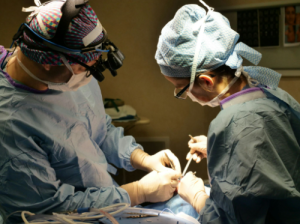
Adapting the Pilot Structure for Rural and Critical Access Hospital Contexts
The standard NekSpine hospital pilot framework, described in detail in our hospital pilot execution kit, is designed for surgical departments with enough participating surgeons to produce data that reflects specialty-level variation. For rural hospitals and smaller surgical departments, the pilot framework is adapted in several practical ways:
- Smaller cohort sizing: a pilot with two to three surgeons across the primary surgical specialties at the institution produces meaningful individual feedback and supports an adoption decision for a smaller department, even though it does not produce the statistical breadth of a larger cohort
- Simplified measurement: the core measurement framework — pre-pilot baseline discomfort, during-trial discomfort, and device acceptance — is retained regardless of cohort size; the data capture process is simplified for departments without dedicated research or quality improvement staff to administer it
- Flexible fitting logistics: for rural institutions where on-site fitting visits involve greater travel, our team accommodates scheduling flexibility and can conduct group fitting sessions that serve multiple surgeons during a single visit
- Streamlined documentation: the procurement documentation package for rural hospitals is structured around the documentation requirements of smaller institutions, including critical access hospital procurement policies that may differ from large health system requirements
Contact our team through our contact page to discuss how we would adapt the pilot structure to your institution, including the number of participating surgeons, the surgical specialties involved, and the fitting and documentation logistics that work best for your location.
The Procurement Pathway for Rural and Smaller Institutions
What the Process Looks Like From First Conversation to Device in Use
Rural and smaller institutions may have procurement processes that differ from those used by larger health systems, with fewer administrative steps in some cases and different vendor credentialing requirements in others. The NekSpine procurement pathway for rural institutions is structured around practical simplicity:
- Initial conversation: a call or contact form submission that covers the institution’s surgical specialties, the number of surgeons who would participate in the pilot, and any specific documentation or vendor credentialing requirements the institution’s procurement process imposes
- Pilot documentation package: our team provides the peer-reviewed evidence package, the pilot measurement framework, pricing and configuration for the pilot cohort, and any vendor credentialing documentation required by the institution’s procurement policy
- Fitting and onboarding: our team schedules and conducts individual fittings for each participating surgeon, accommodating the geographic and scheduling constraints of rural practice environments
- Pilot evaluation and adoption decision: the institution completes the defined pilot period, reviews the outcome data against pre-defined decision criteria, and proceeds to full adoption, extended evaluation, or non-adoption based on that review
- Ongoing support: our team provides ongoing support for fit adjustments, new staff onboarding, and any device questions that arise after the initial rollout
This process is designed to minimize administrative demands on the institution while providing a clear basis for an adoption decision at the end of the pilot, rather than relying on a collection of individual surgeon impressions. Contact our team through our contact page to initiate the first conversation.
Rural Hospitals Cannot Afford to Treat Surgical Staff Occupational Health as a Secondary Priority. The Margin for Absorbing the Consequences Is Simply Too Thin.
The peer-reviewed evidence on the surgical musculoskeletal burden applies to every surgeon who carries the intraoperative postural load described in the literature, regardless of where they practice. The institutional consequences of that burden, when it plays out as career-limiting occupational injury, are more acute at rural and smaller institutions than at large academic medical centers, because the redundancy that large institutions use to absorb workforce disruption does not exist on the same scale. A practical pilot evaluation adapted for a smaller surgical cohort, supported by our team through the fitting logistics and procurement documentation that rural institutions require, is the same straightforward next step as for any institution evaluating the device. Contact our team through our contact page to start that conversation, or review the clinical evidence supporting the evaluation decision on our clinical evidence page.