OR Fatigue and Staff Retention: The Operational Case for Ergonomic Investment in Surgical Departments

Surgical Staff Retention Is Increasingly Influenced by Quality-of-Practice Factors That Ergonomic Investment Directly Addresses
Surgical talent is expensive to recruit, time-consuming to credential, and difficult to replace when experienced staff leaves the department. Hospital administrators and OR medical directors who think about surgical staff retention primarily in terms of compensation and scheduling are addressing part of the picture. The quality-of-practice environment a hospital provides, including how it supports the physical sustainability of surgical work over the course of a career, is an increasingly visible factor in how surgical talent evaluates where to practice and how long to stay.
A hospital that treats surgeons’ physical endurance as an individual responsibility rather than an institutional concern signals the quality of its practice environment. A hospital that invests proactively in the ergonomic infrastructure that supports surgeon endurance sends the opposite signal, and that signal is legible to surgical recruits and to surgeons evaluating whether to remain. Contact our team through our contact page to discuss how NekSpine supports surgical staff retention as part of a department-level ergonomics program.
What the Evidence Suggests About Surgical Fatigue and Career Trajectory
The Occupational Pattern the Literature Describes
The peer-reviewed literature on surgical musculoskeletal strain documents an occupational pattern that has career-trajectory implications for the surgical workforce. According to Epstein et al., JAMA Surgery, which examined 5,828 physicians across 21 studies, reported rates of degenerative cervical spine disease among surgeons increased by approximately 18.3% between 1997 and 2015, suggesting that occupational strain may accumulate over the course of a career rather than remain constant. According to a PMC worldwide MSD meta-analysis, the prevalence of neck pain among surgeons was reported at approximately 41% for open-surgery practitioners, a figure that represents a substantial proportion of any surgical department’s active workforce. According to a ScienceDirect PRISMA systematic review, loupe use, neck flexion greater than thirty degrees, and open surgery were associated with cervical dysfunction in surgeons across multiple studies.
These figures do not establish a definitive causal chain between surgical musculoskeletal strain and career attrition. They do describe an occupational health pattern consistent with the workforce sustainability concern that surgical department chiefs and hospital administrators recognize from clinical observation. A department that loses experienced surgical capacity due to occupational injury incurs the costs of recruiting, credentialing, and onboarding a new surgeon at a time when experienced surgical capacity is least available to bridge the gap. Our clinical evidence page summarizes the full evidence base for use in internal retention and workforce planning conversations.
The Connection Between Physical Endurance and Department-Level Surgical Output
Where Surgeon Fatigue Affects Operational Performance
The operational consequences of surgeon fatigue during long operative cases extend beyond the individual surgeon’s experience. A surgeon whose physical endurance during long cases is affected by cumulative musculoskeletal strain operates with reduced stamina in the case types that tend to generate the highest surgical volume for the department. A department that loses senior surgeons to occupational injury absorbs a surgical volume reduction that affects operational performance without any corresponding reduction in overhead. And a department whose high-volume surgeons reduce their caseload in response to physical discomfort absorbs that same reduction without the recruitment event that would make it visible to workforce planning.
Each of these consequences is a real operational cost category that proactive ergonomic investment can plausibly reduce. According to the NekSpine Mayo Clinic study in Annals of Surgery, passive cervical support resulted in a 56% increase in static endurance time during actual surgical procedures. While this outcome was measured in a study context and individual results will vary, it is the most directly relevant outcome to the physical endurance dimension of long-case surgical productivity. Contact our team through our contact page to discuss how to frame the productivity case for your department.
Ergonomic Investment as a Retention and Recruitment Signal
What Quality-of-Practice Environment Communicates to Surgical Talent
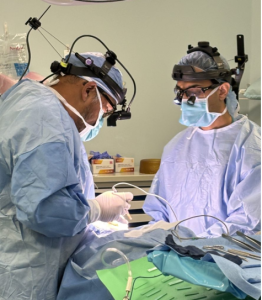
Surgical talent evaluates practice environments across multiple dimensions, and the physical sustainability of a surgical career at a given institution is one of them. The visibility of surgical musculoskeletal strain as an occupational pattern has grown alongside the peer-reviewed evidence base that documents it, and surgeons entering practice today are more aware of that pattern than their predecessors were. A hospital that has invested in ergonomic infrastructure for its surgical staff communicates to prospective surgical recruits that the institution takes quality of practice seriously as an institutional responsibility. That communication has value in a competitive surgical talent market where compensation differentials between institutions are frequently comparable and quality-of-practice factors differentiate the offer. The retention value of that signal applies equally to existing surgical staff, for whom institutional ergonomic investment shows the hospital is invested in the long-term sustainability of their careers. Contact our team through our contact page to discuss how to position ergonomic investment as part of a surgical staff retention and recruitment strategy for your department.
Building the Internal Case for Ergonomic Investment as a Workforce Sustainability Strategy
Three Evidence Streams That Support the Budget Conversation
The internal case for ergonomic investment as a surgical staff retention strategy connects three evidence streams that hospital administration and human resources can evaluate independently. The peer-reviewed evidence documents the occupational health pattern and its associations with career trajectory in a population that matches the hospital’s surgical workforce. The operational cost analysis links career attrition due to occupational injury to the replacement, credentialing, and productivity-loss costs the hospital absorbs at the department level. And the device-level evidence documents the specific effects of the ergonomic intervention on endurance and discomfort during actual surgical procedures, with the appropriate caveat that individual results will vary.
Together, these three streams support a budget conversation that frames ergonomic investment as a workforce sustainability strategy rather than a comfort expenditure, with a structured pilot evaluation as the appropriate next step before a full procurement commitment. Our hospital pilot execution kit provides the framework for that evaluation, and our clinical evidence page provides the peer-reviewed evidence stream in a format suitable for internal documentation.
The Most Effective Surgical Staff Retention Investment May Be One That Supports Surgical Careers Rather Than Replacing Surgeons Who Leave Earlier Than Expected.
Hospital administration and OR leadership have two approaches to the workforce consequences of surgical musculoskeletal strain: address the strain proactively through ergonomic investments, or absorb the attrition, replacement, and productivity costs when the strain results in career-limiting consequences. The peer-reviewed evidence describes the occupational health pattern at a population level.
The Mayo Clinic and University of Alberta studies describe the specific ergonomic interventions implemented in actual operating environments, with the understanding that individual results will vary. The operational logic connecting physical endurance to department-level surgical output and staff retention is available to any OR medical director or hospital administrator who reviews the evidence. What turns that evidence into an institutional decision is a structured pilot that produces real data from real surgeons in the specific department, along with a procurement pathway that clarifies the transition from pilot to adoption. Contact our team through our contact page to begin that process, or review the full clinical evidence base on our clinical evidence page.