The Limits of Posture Alone in Surgical Settings
Posture training focuses on alignment, awareness, and positioning. These are valuable foundations for musculoskeletal health. However, posture alone does not eliminate the mechanical load placed on the body during long procedures.
In surgical environments, clinicians are required to maintain static positioning for extended periods while focusing intensely on a limited visual field. Even when posture is technically correct, the muscles of the neck and upper back remain continuously engaged to hold that position.
This creates a situation where:
- The spine is aligned.
- The muscles are still working continuously.
- Procedural requirements restrict movement.
Over time, this leads to fatigue not caused by poor posture but by sustained posture itself.
This is the key gap: correct positioning does not remove load; it only distributes it more efficiently.
Why Fatigue Still Builds Even With “Perfect” Posture
Fatigue in surgical settings is not always the result of visible strain or incorrect positioning. It often develops from prolonged isometric muscle engagement, in which muscles are held in a constant state of contraction without rest.
Even when posture is ideal, the following conditions still apply:
- The head is held in a fixed position relative to the surgical field.
- The neck muscles continuously stabilize the skull.
- The upper back supports static alignment for extended periods.
- Micro-adjustments are minimized to maintain precision.
This sustained effort leads to gradual muscle fatigue, even without movement or obvious discomfort.
As fatigue increases, surgeons may experience:
- Subtle stiffness in the neck and shoulders
- Reduced ease in maintaining upright alignment
- Increased awareness of posture during long cases
- Greater effort is required to sustain precision positioning.
The important distinction is that this is not a posture failure; it’s a load endurance limitation.
The Surgical Ergonomics Gap
The “ergonomics gap” refers to the difference between theoretically correct posture and what the human body can sustain during real surgical workloads.
Ergonomic training can optimize alignment, but it cannot eliminate:
- Gravity load on the cervical spine
- Continuous muscle activation is required for head stabilization.
- Fatigue accumulation during long static procedures
- Repetitive strain across multiple cases in a day
This means that even well-optimized posture systems eventually reach a point where fatigue becomes unavoidable.
The result is a mismatch between:
- What clinicians are trained to do
- What their bodies can sustain for extended periods
This gap becomes more noticeable in high-volume surgical environments where procedures are long, repetitive, or performed back-to-back.
Why This Matters for Precision and Consistency
Surgical performance depends on sustained control rather than isolated moments of accuracy. Even small changes in physical stability can influence fine motor consistency over time.
As fatigue builds in the cervical and upper back regions, it can affect:
- Postural stability during delicate movements
- Visual alignment consistency
- Efficiency of micro-adjustments
- End-of-case physical control and comfort
These changes are not dramatic or immediate. Instead, they accumulate gradually across the duration of a procedure or a full clinical day.
The key issue is not whether posture is correct, but whether it can be maintained without increasing physical effort over time.
Moving Beyond Posture Correction
Traditional ergonomic strategies in surgical environments often focus on:
- Training clinicians to maintain upright posture
- Adjusting chair or table height
- Optimizing monitor positioning
- Encouraging awareness of body alignment
These are important, but they primarily address positioning rather than sustained load.
What is often missing is external support that reduces the continuous muscular demand required to maintain posture during long procedures.
This is where structured cervical support becomes relevant.
Introducing Structured Cervical Support
Structured cervical support is designed to address the mechanical load that persists even with correct posture.
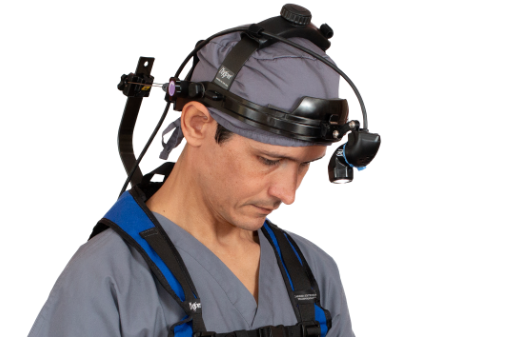
NekSpine provides external support for the cervical spine during static positioning, helping reduce the continuous muscular effort required to maintain head and neck stability during surgical work.
Instead of replacing posture training, it complements it by supporting the physical system that maintains alignment over time.
The goal is not to change how surgeons operate, but to reduce the effort required to maintain correct positioning throughout procedures.
How NekSpine Supports Sustained Surgical Work
By reducing continuous muscular load in the neck and upper back, structured cervical support helps improve endurance during long surgical procedures.
This support can contribute to:
- Reduced cumulative cervical muscle fatigue
- Improved ability to maintain stable posture over time
- Less physical strain during long or complex procedures
- Greater consistency across multiple cases in a clinical day
- Reduced end-of-day musculoskeletal fatigue
The key difference is not improved posture in isolation, but improved posture sustainability under real workload conditions.
Why This Is Not a Replacement for Ergonomic Training
It is important to understand that structured support does not replace ergonomic education or posture awareness. Instead, it fills the gap between ideal positioning and real-world endurance capacity.
Posture training improves alignment. Structured support helps maintain that alignment under sustained load.
Both are necessary for long-term musculoskeletal sustainability in surgical environments.
The Practical Impact in Clinical Environments
In real-world surgical settings, the most meaningful improvements are often related to endurance rather than to changes in technique.
When cervical load is reduced during procedures, clinicians may experience:
- Less physical effort is required to maintain positioning.
- More consistent comfort across long cases
- Reduced fatigue accumulation across the day
- Improved ability to sustain focus without physical distraction
These outcomes support both immediate procedural performance and long-term occupational health.
Book a Fitting
Understanding the gap between posture and endurance is the first step toward improving surgical ergonomics.
Structured cervical support is designed to bridge that gap by reducing sustained muscular load during procedures without changing clinical technique.
Book a NekSpine fitting to evaluate how cervical support can help reduce fatigue, improve endurance, and support sustained precision in surgical environments.