
Invasive surgical procedures place a unique demand on the surgeon’s body that other clinical settings rarely match. The combination of sustained forward head position, prolonged static stabilization of the cervical spine, and the inability to reposition during a critical operative phase creates cumulative neck and upper spine load that builds case by case. Surgeons who operate in general, vascular, ENT, orthopedic, plastic, and oral-maxillofacial specialties face this load routinely. The question isn’t whether neck strain accumulates during invasive procedures—the physiology makes that outcome predictable. The question is whether anything can reduce that load while the surgeon continues to operate.
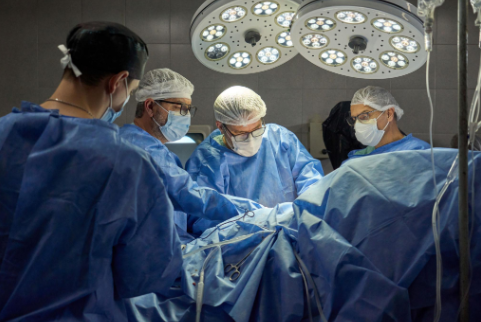
Invasive surgery requires sustained visual focus on a defined operative field. That field is almost always below the surgeon’s natural sight line, which means the head must tilt forward and hold that position for extended periods. A head positioned at 30 degrees of forward flexion places approximately three times the resting weight of the skull onto the cervical spine. At 45 degrees, that figure rises further. Surgeons do not hold these angles for seconds — they hold them for the duration of a case, which in complex procedures can extend well past two hours.
The muscles of the neck and upper back fatigue under sustained load. As fatigue sets in, the surgeon begins to compensate with altered posture, shoulder elevation, and more frequent repositioning attempts — all of which interrupt focus and add secondary strain to adjacent muscle groups. The cervical spine itself absorbs compressive force that the fatigued muscles can no longer fully offset. This is the physiological sequence that links procedure length to post-operative pain, stiffness, and, over a career, to cumulative musculoskeletal injury.

OR ergonomics strategies — adjustable table height, stool positioning, anti-fatigue mats, loupes with appropriate declination angles — address the surgeon’s relationship to the operative field. They reduce the degree of neck flexion required to maintain a working line of sight. These interventions are evidence-supported, and surgeons who use them consistently report better comfort than those who do not.
The limitation of positioning interventions is that they optimize the angle at which the surgeon begins a procedure. They do not reduce the gravitational load the cervical spine carries at that angle over time. A surgeon whose table is set correctly still stabilizes the full weight of the head against gravity for every minute of the case. As procedure length increases, so does total cervical load — regardless of how well the initial setup was configured.
Positioning adjustments also require breaks in operative attention to implement mid-case. In the critical phases of an invasive procedure, the surgeon cannot pause to raise the table, switch stools, or change loupes. The interventions that require stopping are unavailable when fatigue is accumulating fastest.
NekSpine is a wearable cervical support system built from carbon fiber and medical-grade materials. It works by providing a direct contact point between the head frame and the support beam, allowing gravitational force from the head to transfer into the vest structure rather than loading entirely onto the cervical vertebrae and surrounding musculature. The surgeon’s neck muscles still function—NekSpine does not immobilize or brace the cervical spine—but the ongoing stabilization demand drops because the device structure carries part of the load.
The practical effect during invasive procedures is a reduction in the rate at which cervical fatigue accumulates. A surgeon wearing NekSpine during a four-hour procedure experiences less cumulative neck load than a surgeon without it working at the same operative angle for the same duration. That difference compounds across a full day of cases and across a surgical career. The clinical evidence NekSpine has compiled supports independent findings that the device reduces neck muscle strain across multiple flexion angles measured under controlled conditions.
NekSpine is designed to work alongside the tools surgeons already use. The head frame is compatible with surgical loupes, headlights, and operating microscopes. The support beam and vest may not restrict arm movement, torso rotation, or the reach required for standard operative technique. Surgeons may not need to change how they operate to use NekSpine — the device integrates into existing workflow rather than requiring adaptation of surgical practice.
See how NekSpine integrates with your surgical setup.
Schedule a fitting consultation here — or review the clinical evidence supporting NekSpine.
Open abdominal, thoracic, and vascular procedures often require the surgeon to maintain consistent forward positioning while working at depth. Case durations in these specialties frequently exceed two hours. NekSpine’s lightweight profile and vest-integrated support structure make it practical for cases where the surgeon must maintain consistent operative reach without restricting torso movement.
ENT and OMFS procedures concentrate the surgeon’s attention on a compact operative field, requiring high visual precision at close range and sustained neck flexion at angles that maximize load. Procedures involving the skull base, sinuses, or jaw structures can lock the surgeon into a near-fixed position for extended durations. The NekSpine ergonomic support system addresses this specific loading pattern because it reduces the gravitational demand on the cervical spine without changing the working angle the procedure requires.
Orthopedic procedures — particularly joint reconstruction, spinal surgery, and complex fracture fixation — can run long and require alternating periods of high physical effort and sustained static posture. Plastic and reconstructive surgery often involves fine work under magnification with minimal opportunity to reposition. In both environments, the capacity to sustain precision late in a case correlates with how much cervical fatigue has accumulated by that point. Reducing that fatigue with NekSpine supports both the quality of late-case work and the surgeon’s recovery between cases.
Oral surgeons, periodontists, and dental clinicians performing invasive procedures work in a seated posture with a consistent forward lean toward a patient in supine position. The operative field requires the clinician’s head and neck to remain flexed for the full duration of the procedure. Because dental procedures often involve multiple patients in a single session without substantial recovery time between them, cervical fatigue accumulates across the day rather than resetting between cases. NekSpine’s adjustability for sitting positions makes it applicable to dental invasive procedures in the same way it applies in the OR — reducing the ongoing load without changing operative technique. Surgeons and dentists who want to understand fit and adjustability specific to their setting can review the dedicated NekSpine fit and adjustability resource for surgeons and dentists.
NekSpine is a direct load-reduction tool, not a substitute for sound OR ergonomics. Table height, loupe selection, operative stool positioning, and break scheduling remain important components of a complete ergonomic approach. The evidence for these interventions is well established, and surgeons should continue applying them. NekSpine addresses the component of cervical load that positioning interventions cannot reach—the gravitational force that continues loading the cervical spine regardless of how well the surgeon’s setup optimizes their working angle.
The combination of good ergonomic practice and direct cervical support through NekSpine addresses a broader range of the fatigue mechanisms that invasive surgery creates. Neither approach alone solves the complete problem. Together, they reduce cervical load at multiple points in the fatigue pathway. Clinicians who want to understand how the full endurance picture applies across a multi-case day can review the multi-case surgical endurance support program.
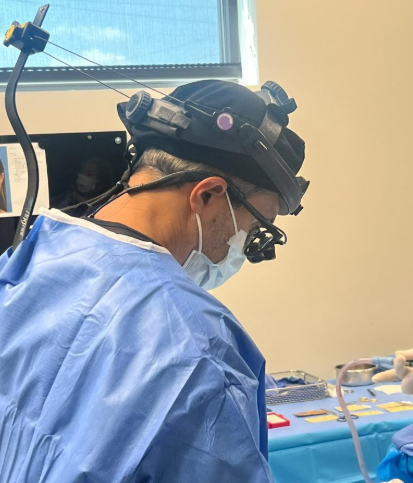
Surgeons who have used NekSpine in clinical practice report consistent themes. Neck and upper back pain during and after cases is reduced. The sense of fatigue that typically builds late in a long procedure is less pronounced. The recovery period after a demanding operative day is shorter. These reports reflect what the biomechanics of load reduction predict: when the cervical spine carries less force over the duration of a procedure, it accumulates less fatigue and requires less recovery time.
Detailed clinician accounts are available through the NekSpine surgeon insights and experiences page. Surgeons considering a trial can review both the clinical evidence and direct practitioner experience before scheduling a fitting, which allows them to evaluate NekSpine against their specific specialty demands and operative schedule.
The right way to evaluate NekSpine is in the operative environment where neck load actually accumulates. A trial under procedure conditions — wearing the device during a case similar in length and positioning demand to the surgeon’s typical workload — provides direct evidence of the load-reduction effect. NekSpine offers personalized fittings and trial arrangements that allow surgeons to assess the device in their own clinical setting before committing to regular use.
Surgeons working in high-volume invasive environments, or those already experiencing cervical symptoms from sustained operative posture, have the most to gain from early evaluation. The earlier NekSpine is incorporated into a surgeon’s practice, the more cumulative load is avoided over the course of a career. Surgeons interested in department-wide implementation, including facility-level pilot programs, can review the NekSpine Hospital Pilot Kit for information on structured institutional evaluation.
Invasive surgery will always require sustained forward posture and prolonged cervical stabilization — that is the nature of operating at depth in a defined field. NekSpine does not change what the procedure requires. It changes how much of that load the surgeon’s cervical spine carries alone. For surgeons whose careers depend on maintaining precision and endurance across thousands of operative hours, that difference is the one worth addressing directly. The full NekSpine solutions overview covers the complete product line for clinicians evaluating all available support options.
Ready to reduce cervical load during your invasive procedures?
Book a personalized NekSpine fitting.