Surgeons and dentists work in environments where no two practitioners are identical in height, reach, operative technique, or the specific demands of their specialty. A cervical support device that cannot accommodate that variation will not perform consistently — and one that requires a clinician to compromise their working posture to accommodate the device defeats the purpose. NekSpine is built around adjustability as a core design principle, not a secondary feature, because fit is the mechanism through which load reduction actually occurs. A device that doesn’t fit correctly doesn’t offload cervical strain correctly. This resource explains how NekSpine’s adjustability system works, what it accommodates, and why personalized fit is the variable that determines whether the device delivers its intended benefit.

The cervical spine carries the weight of the head in positions that vary by individual anatomy, body proportions, specialty-specific posture, and the positioning demands of a given procedure. A surgeon performing laparoscopic cholecystectomy holds a different neck angle than an orthopedic surgeon doing open joint reconstruction. A dentist seated at a hygiene chair leans into the operative field in a pattern that differs from a standing oral surgeon. Even within the same specialty, height, arm length, and torso proportions change the angle at which the head sits relative to the operative field.
Cervical support that works by providing a contact point between the head and a structural member only reduces load when that contact point is positioned correctly. If the head frame sits too high or too low, the transfer of gravitational force into the vest structure is incomplete. If the support beam angle does not match the clinician’s natural working posture, the device creates resistance rather than offloading. Fit is not a comfort preference — it is the operational requirement that makes load reduction possible. The NekSpine ergonomic support system is designed so each component adjusts to achieve the correct contact geometry for each clinician.
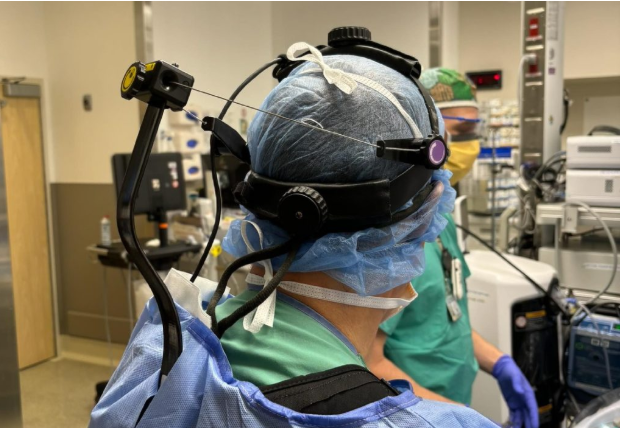
The head frame provides the contact point between the clinician’s head and the rest of the NekSpine structure. Its height and forward position adjust to match the clinician’s skull geometry and the angle at which their head rests during normal operative positioning. The head frame is designed to be compatible with surgical loupes, headlights, and operating microscopes — so the adjustment process accounts for any equipment the clinician already wears during procedures. Surgeons who use headlights alongside NekSpine can review the compatible NKS Pro360 surgical headlight, which is designed to integrate with the NekSpine system.
The support beam connects the head frame to the vest and provides the structural path through which cervical load transfers from the neck to the torso support structure. The beam adjusts in length and angle to match the clinician’s torso height and their natural forward working lean. For a standing surgeon with a relatively upright posture, the beam angle differs from what works for a seated dentist with a consistent forward lean. Getting this adjustment right is critical — a beam set to the wrong angle means the head frame contact point shifts under load, reducing the effectiveness of the load transfer.
The vest distributes the load transferred through the support beam across the torso. It adjusts for body size and chest circumference to ensure a secure, non-restrictive fit that keeps the structural members positioned correctly as the clinician moves. The vest is designed to allow full arm range of motion, torso rotation, and the reach required for standard operative technique. Clinicians who work in confined spaces or need to reach across a wide operative field should specify their working conditions during fitting so the vest configuration matches their typical movement range.
Standing procedures in the OR require the support beam to accommodate the clinician’s full standing height and maintain correct head frame positioning as the surgeon shifts weight and adjusts stance during long cases. The vest must stay secure without restricting the forward reach and lateral movement required by surgical technique. NekSpine’s adjustability range covers the height variation across the surgeon population, and the vest closure system stays stable throughout a full operative session without mid-case readjustment.
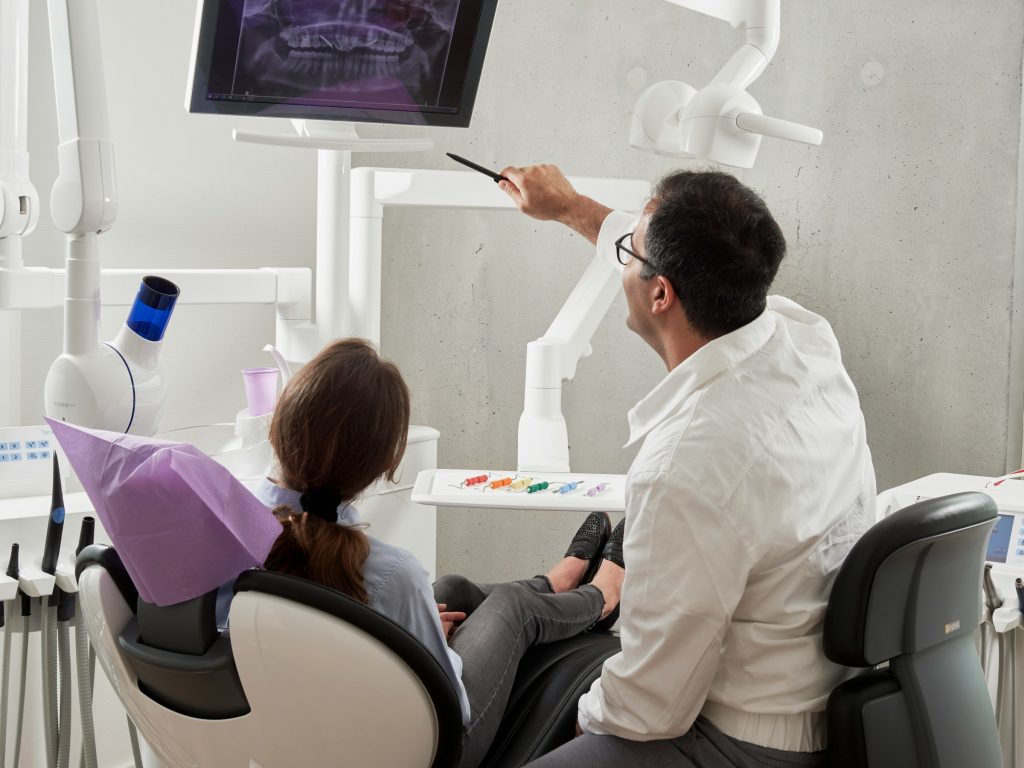
Seated clinicians — including dentists, hygienists, and surgeons who work at a stool — use a different postural geometry than standing surgeons. The forward lean typical of seated dental work means the support beam angle needs to accommodate the torso’s forward pitch while maintaining correct head frame contact. NekSpine adjusts for this seated position. Clinicians who alternate between sitting and standing during procedures — a pattern seen in some surgical specialties and in dental practices where the clinician moves between treatment chairs — should raise this during fitting so the adjustment accommodates both positions. The specific challenges of invasive procedures in these environments are covered in more detail in the resource on how NekSpine fits into invasive surgeries.
The clinician population spans a wide range of heights, torso lengths, and body proportions. A device calibrated only for average dimensions will fit poorly at the extremes of that range—and poor fit reduces load-reduction effectiveness. NekSpine’s adjustment range accommodates the full anthropometric spread of surgical and dental practitioners, including those at the shorter and taller ends of the height range who are most likely to find that standard-sized support devices don’t position correctly on their bodies.
Getting the most from NekSpine requires a fitting that accounts for the clinician’s specific anatomy and their typical working posture. A fitting session involves adjusting the head frame height and position, setting the support beam length and angle, and configuring the vest for secure fit and full range of motion. The clinician wears the configured device in a simulated working position so they can confirm the contact geometry before using the device in a live case.
Clinicians who have already established their preferred loupe and headlight setup should wear that equipment during the fitting session, because the head frame adjustment needs to account for any additional weight or positioning influence those devices introduce. The goal of the fitting is a configuration the clinician can put on consistently before each procedure and that performs the same way every time—without requiring per-session adjustment or mid-case correction.
NekSpine’s fitting process also addresses the needs of departments or facilities that want to standardize cervical support across a clinical team. Surgeons and practitioners of different heights and specialty demands can each receive an individualized configuration, even within a shared implementation program. Facilities evaluating a department-wide deployment can review the Hospital Pilot Kit for information on structured multi-clinician evaluation.
When NekSpine is correctly fitted for a specific clinician and their working environment, the device reduces the gravitational load the cervical spine carries during operative timeSurgeons and dentists using a properly fitted NekSpine may experience less neck and upper back fatigue during lengthy procedures, less post-procedure soreness, and improved comfort during back-to-back cases.
These outcomes align with what the biomechanics of load reduction predict: less sustained force on the cervical spine produces less fatigue accumulation over the course of a session.
The clinical evidence supporting NekSpine includes independent research measuring neck muscle strain reduction across multiple flexion angles. That research was conducted on correctly fitted devices — which is why fit accuracy matters. A poorly fitted device does not produce the load-reduction effect the research supports. The fitting process is not a formality — it is the step that determines whether the device’s intended clinical effect actually occurs. Clinicians who want direct accounts of how other practitioners have experienced NekSpine in their own environments can review the surgeon insights and experiences page.
Sustained cervical strain is a career-long accumulation problem, and a correctly fitted NekSpine is a direct, case-by-case response. Each procedure the device is worn during is one in which the cervical spine carries less load than it otherwise would.Over the course of a clinical career, addressing cervical loading may help reduce the cumulative musculoskeletal strain clinicians experience over time. A proper fit is where that benefit starts. Clinicians ready to evaluate NekSpine for their specific specialty and body can take the first step by scheduling a fitting through the NekSpine contact page.
A correct fit is the foundation of effective cervical load reduction.
Book your personalized NekSpine fitting.