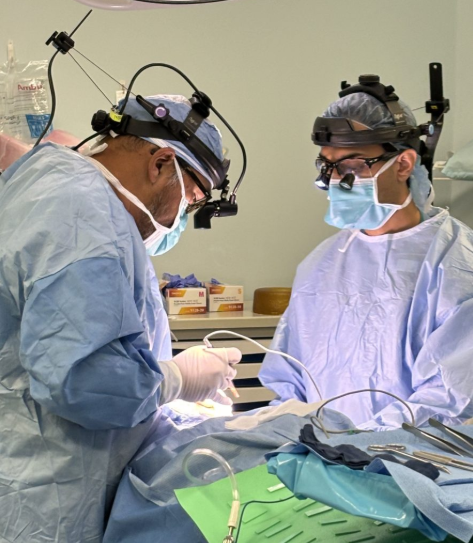
The Appeal of “Posture Fixes” in Clinical Work
It is easy to understand why posture fixes are the first step for many clinicians. Adjusting equipment or improving setup can feel like an immediate and practical improvement. These changes are accessible, low-cost, and can be implemented quickly across most clinical environments.
Common strategies include ergonomic chair adjustments, modifying table height, repositioning monitors for better visual alignment, using reminders to maintain upright posture, and incorporating stretching or mobility work between patients or procedures. These approaches are widely used and can help improve awareness of posture habits.
While they help optimize the working environment, they do not directly reduce the physical demands on the body during the procedure itself.
The Core Issue: Static Posture Under Continuous Load
The central challenge in both surgical and dental work is not simply posture alignment, but sustained static posture under continuous load.
During procedures, clinicians must maintain precise positioning for extended periods while keeping the head and neck steady for visual focus and accuracy. This limits natural movement and places ongoing demand on the cervical spine and surrounding musculature.
Even in well-adjusted ergonomic environments, the neck and upper back are still responsible for supporting the head throughout the entire duration of the procedure. Over time, this leads to fatigue, tightness, and a gradual breakdown of posture as muscles become increasingly taxed.
This is where many traditional posture fixes fall short. They improve alignment at the start of a procedure, but do not change the fact that the body must continuously hold that position.
Why Chairs, Tables, and Stretching Alone Don’t Fully Solve It
Ergonomic chairs and properly adjusted tables are important because they help place the body in a more neutral starting position. Stretching routines and mobility exercises are also valuable for resetting the body between procedures. However, these tools are primarily indirect solutions.
Once a procedure begins, clinicians remain in a sustained, static posture, with the same muscle groups continuously supporting the head and upper body. No matter how optimal the setup is, the physical demand remains constant during that time.
Stretching may temporarily relieve tension, but it does not address the ongoing strain that accumulates during the procedure itself. Similarly, improved positioning reduces awkward angles but does not eliminate muscular workload.
As a result, many clinicians still experience fatigue even when they consistently apply ergonomic best practices.
The Missing Piece: Direct Cervical Spine Support
The key difference between general posture adjustments and NekSpine is where and when support is applied.
Instead of focusing only on the environmental setup, NekSpine provides direct support to the cervical spine during use. This means it works during the exact period when strain is being generated.
By supporting the head and neck, NekSpine helps reduce the muscular effort required to maintain posture during long, static procedures. This does not replace good ergonomic positioning, but it enhances it by addressing physical load in real time.
Rather than only improving how a clinician is positioned, it helps make that position easier to sustain.
How NekSpine Fits Into Surgical and Dental Workflows
One of the most important considerations in any clinical tool is whether it integrates smoothly into existing workflows. If a solution requires significant changes to technique or setup, adoption becomes difficult.
NekSpine is designed to fit into current surgical and dental environments without requiring changes to how procedures are performed. It supports the posture clinicians already use rather than forcing a new one.
Because it is adjustable, it can be adapted to different body types, procedural styles, and clinical settings. This makes it suitable for a range of environments where posture demands are consistent but individual workflows vary.
Why Static Strain Builds Over Time
A major factor in musculoskeletal fatigue is not isolated strain, but cumulative loading. Discomfort rarely comes from a single procedure. Instead, it builds gradually across multiple cases and through repeated exposure to the same physical demands.
In busy clinical settings, procedures are often performed back-to-back with limited recovery time. Even if each individual case feels manageable, the repeated load on the neck and upper back creates accumulation throughout the day.
By the end of a full clinical schedule, this can present as fatigue, stiffness, or reduced endurance. Over longer periods, this cumulative strain can become more noticeable and persistent.
Why This Matters for Long-Term Clinical Health
Musculoskeletal strain is one of the most common occupational challenges in both surgery and dentistry. The repeated demands of static posture can impact comfort, endurance, and long-term physical well-being.
While clinicians often adapt to discomfort, adaptation does not remove the underlying physical workload. It simply shifts how it is experienced.
Addressing posture support during procedures helps reduce strain at the point of strain, rather than only managing symptoms afterward. This is particularly relevant for clinicians who maintain high procedural volumes over many years of practice.
Combining Ergonomics With Active Support
The most effective approach to clinical ergonomics is not replacing traditional posture strategies, but building on them.
Chair positioning, table height adjustments, monitor alignment, and stretching routines all contribute to improved ergonomics. However, these strategies are most effective when combined with support that directly reduces procedural load.
NekSpine adds this layer by providing cervical spine support during the moments when physical strain is highest.
This combined approach helps clinicians maintain better alignment, reduce fatigue, and support more consistent performance throughout the day.
Rethinking What “Posture Fixes” Really Solve
The idea of a simple posture fix is appealing because it suggests an easy solution to a complex, ongoing physical challenge. However, clinical posture is not defined only by how someone sits or stands, but by the sustained demands placed on the body during work.
True ergonomic improvement requires addressing both positioning and physical load. Environmental adjustments help set the stage, but they do not reduce the continuous effort required during procedures.
NekSpine focuses on that missing piece by supporting the cervical spine during use, helping reduce strain where it actually develops.
Moving Beyond Adjustments
Simple posture adjustments are a useful starting point, but they do not fully address the demands of long, static procedures in surgical and dental environments. The physical load placed on the neck and upper back persists even in well-optimized setups.
NekSpine is designed to complement existing ergonomic practices by providing direct support during procedures. Instead of relying solely on external adjustments, it helps reduce the internal strain experienced while working.
For clinicians who spend long hours in fixed positions, this additional layer of support can improve comfort, endurance, and long-term musculoskeletal well-being.
Discover how NekSpine provides real cervical support beyond temporary posture fixes, schedule a consultation to see how it can support your surgical or dental workflow.