Why Precision Work Requires a Different Ergonomic Lens
High-precision medicine operates in a category of clinical work where physical demands are subtle, sustained, and cumulative rather than obvious or acute. Unlike general clinical tasks that involve frequent movement variation, high-precision procedures often require clinicians to remain in controlled, highly stable positions for extended periods while maintaining intense visual focus and fine motor accuracy.
This creates a unique ergonomic challenge. The body is not simply performing work. It is maintaining stillness under load while executing highly detailed tasks. Traditional ergonomic frameworks, which tend to focus on posture correction or general workstation alignment, do not fully account for the continuous, low-variation stress experienced in these environments.
As precision demands increase across modern medicine, so does the importance of understanding how the human body adapts to sustained clinical positioning.
Support precision-driven clinical performance with ergonomics designed for long-duration procedural demands. Explore strategies that help reduce cumulative strain while maintaining procedural accuracy.
The Hidden Physical Cost of Sustained Precision
In high-precision environments, the most demanding physical requirement is often not movement but restraint. Clinicians are required to hold stable postures for long durations while maintaining accuracy under pressure. This includes sustained cervical positioning for visual alignment, continuous shoulder stabilization during instrument control, and prolonged static standing with minimal postural variation.
These demands create a form of physical load that is easy to overlook because it does not resemble traditional exertion. There is no obvious lifting, pushing, or repetitive large-scale motion. Instead, the load is distributed through small stabilizing muscle groups that remain active for extended periods without rest.
Over time, this type of sustained engagement leads to gradual fatigue accumulation. Because it develops slowly, it is often normalized as part of the work rather than recognized as a modifiable ergonomic issue.
How the Body Adapts to Static Clinical Demands
The human body is highly adaptive. When exposed to sustained positioning demands, it does not immediately fail. Instead, it begins to redistribute effort across available muscle groups in order to maintain function. This adaptation is often efficient in the short term but can become problematic when repeated consistently.
For example, when deep postural stabilizers begin to fatigue, superficial muscles may take on a greater role in maintaining alignment. This shift allows the clinician to continue working without interruption, but it also increases overall muscular tension and reduces biomechanical efficiency.
Similarly, when visual focus is maintained for long periods, the head and neck may subtly shift forward to reduce perceived effort. While this improves short-term comfort, it increases cervical loading and alters spinal alignment over time.
These compensations are rarely conscious. They are automatic responses designed to preserve performance.
The Role of Micro-Adjustments in Cumulative Strain
One of the most overlooked contributors to ergonomic stress in high-precision medicine is the accumulation of micro-adjustments. These are small, almost imperceptible changes in posture that occur throughout a procedure as the body attempts to maintain comfort and stability.
Individually, these adjustments are not significant. However, when repeated across multiple procedures and clinical days, they begin to form consistent movement patterns. These patterns influence how load is distributed across the musculoskeletal system and can gradually shift the body away from neutral alignment.
Over time, this can result in predictable areas of strain, particularly in the neck, shoulders, and lower back. Because the changes are subtle, they are often not associated with any single task or event, making them difficult to identify without deliberate observation.
Why High-Precision Work Amplifies Physical Load
High-precision medicine amplifies physical load not through intensity of movement but through duration and consistency. The longer a static or semi-static position is held, the greater the demand placed on stabilizing structures.
In addition, precision tasks often require visual fixation on small fields or fine details, which naturally encourages forward head positioning and reduced movement variability. This further increases cervical and upper thoracic loading.
The need for accuracy also reduces opportunities for natural recovery. Unlike more dynamic tasks, where movement variation provides intermittent relief, high-precision procedures often require uninterrupted focus, limiting the body’s ability to reset posture during active work.
This combination of sustained positioning, reduced variability, and high cognitive demand creates a uniquely challenging ergonomic environment.
The Delayed Nature of Ergonomic Feedback
One of the most important characteristics of ergonomic stress in high-precision medicine is delayed feedback. Discomfort rarely appears at the moment strain is being generated. Instead, it typically emerges after procedures or at the end of clinical sessions.
This delay occurs because the nervous system prioritizes task completion over physical sensation during periods of high focus. As a result, early warning signals such as fatigue or tension are often suppressed or ignored until workload decreases.
By the time discomfort becomes noticeable, the underlying movement and positioning patterns have usually been present for a significant period. This delay makes it difficult to connect cause and effect without structured ergonomic assessment.
Environmental Structure as a Primary Driver of Strain
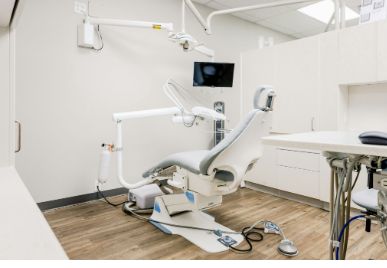
In high-precision clinical environments, physical load is heavily influenced by environmental design. Equipment placement, monitor height, instrument layout, and workspace organization all shape how clinicians must position their bodies to perform tasks effectively.
When these elements are not aligned with neutral biomechanics, the body compensates by adapting posture to meet procedural demands. This may include reaching beyond optimal ranges, rotating the torso for visibility, or elevating the shoulders to maintain access.
Over time, these environmental mismatches become embedded in routine movement patterns. Because they are repeated consistently, they contribute significantly to cumulative strain without being recognized as the primary source.
This makes environmental design one of the most powerful yet underutilized tools in ergonomic improvement.
Compensation as a Silent Performance Strategy
Compensation is often misunderstood as a sign of inefficiency or poor posture. In reality, it is a necessary performance strategy that allows clinicians to maintain output under physically demanding conditions.
When fatigue begins to develop in primary stabilizing muscles, the body naturally shifts load to alternative structures to preserve function. This allows procedures to continue without interruption, even when ideal biomechanics are no longer available.
However, while compensation supports short-term performance, it also increases uneven load distribution. Over time, this can lead to persistent tension in specific regions of the body and reduce overall movement efficiency.
The challenge is not eliminating compensation entirely, but recognizing when it is becoming the dominant movement strategy.
Toward a Systems-Based Understanding of Ergonomics
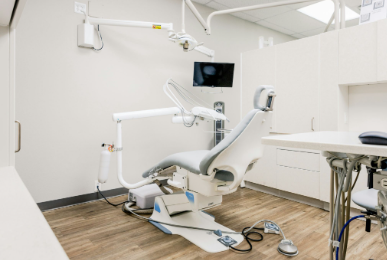
Improving ergonomic outcomes in high-precision medicine requires a shift from individual posture correction to system-level design. The focus must expand beyond how clinicians position themselves to include how the entire clinical environment supports or challenges physical sustainability.
This includes evaluating how procedures are structured, how equipment is arranged, and how workflow timing influences physical recovery opportunities. When these elements are aligned, the need for compensatory movement decreases, and physical load becomes more evenly distributed.
In this model, ergonomics is not an external intervention. It is embedded within the design of clinical work itself.
NekSpine’s Perspective on High-Precision Ergonomics
NekSpine approaches high-precision ergonomics through the lens of cumulative load management and movement pattern analysis. The focus is on understanding how sustained clinical positioning, micro-compensations, and environmental constraints interact over time to influence musculoskeletal health.
Rather than addressing discomfort after it develops, the emphasis is placed on identifying early indicators of strain within real clinical workflows. This allows for targeted adjustments that improve physical sustainability without disrupting procedural precision.
The goal is to support clinicians in maintaining high levels of performance while reducing long-term physical cost.
Final Considerations on Sustainable Precision Work
High-precision medicine will continue to evolve, becoming more complex, more specialized, and more demanding over time. As this evolution continues, the physical expectations placed on clinicians will also increase.
Reimagining ergonomics in this context is not optional. It is a necessary step in ensuring that precision and sustainability can coexist. Without this shift, cumulative strain will continue to develop quietly within clinical populations, often only becoming visible after performance or comfort is already affected.
A proactive approach to ergonomics allows precision work to remain not only effective but sustainable across an entire career.
Closing Call to Action
Precision should be supported by systems that reduce physical cost, not increase it.
Explore NekSpine ergonomic strategies designed to support high-precision clinical environments, reduce cumulative musculoskeletal strain, and improve long-term performance sustainability.