
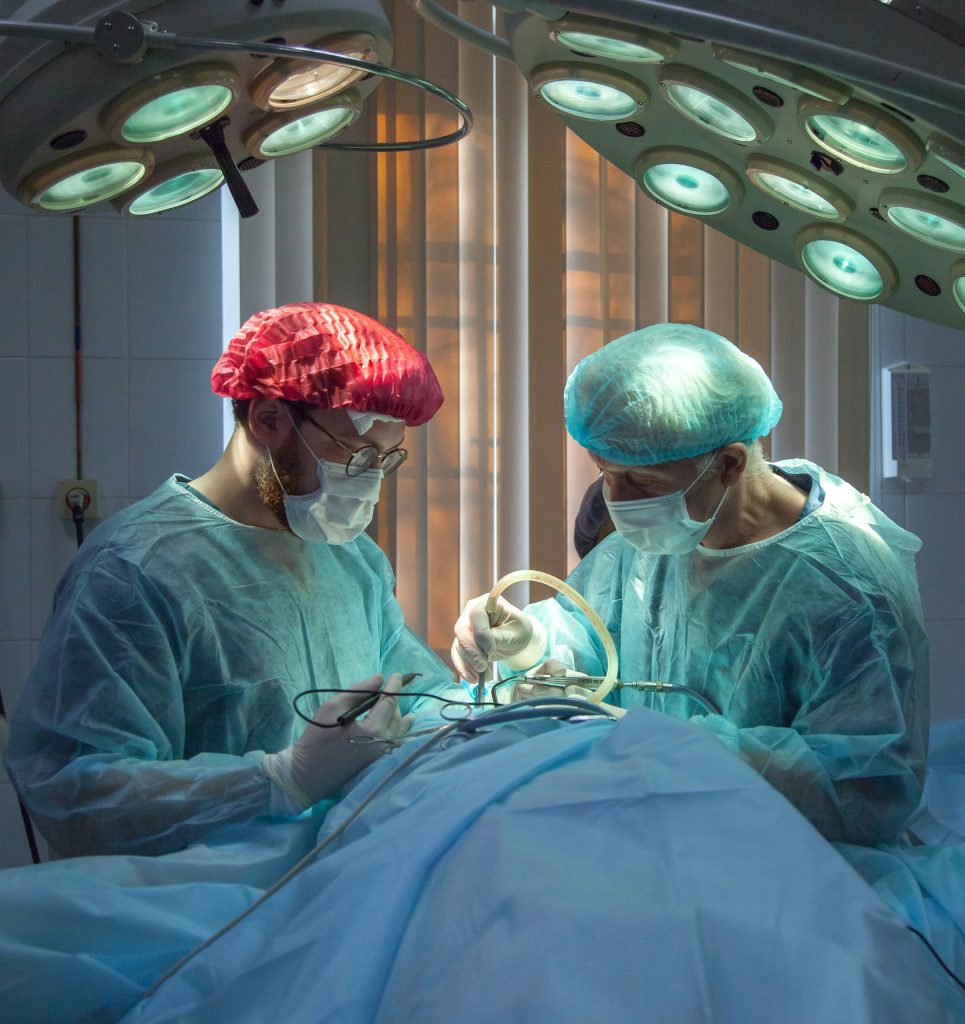
Surgical performance depends on sustained precision, stable motor control, and continuous visual focus. Even minor variations in posture or attention can influence outcomes during delicate or prolonged procedures. While surgeons are trained to maintain consistency under pressure, one factor is often underrecognized in clinical environments: the gradual accumulation of physical fatigue during static positioning.
This page addresses that issue directly. It explains how fatigue develops during surgical work, how it can subtly affect precision over time, and how structured cervical support can help maintain performance consistency across long procedures and full clinical days.
Want to help reduce fatigue while working? Request a NekSpine demo to see how it fits directly into your workflow.
In surgical environments, fatigue is often thought of as general tiredness or end-of-day exhaustion. In practice, it is more specific and more mechanical in nature. It develops through sustained static positioning, repetitive fine-motor activity, and prolonged visual focus, without meaningful postural variation.
During long procedures, surgeons frequently maintain a forward-leaning head and neck position while focusing on a confined operative field. Even when the body appears still, the muscles of the cervical spine, shoulders, and upper back are continuously engaged to support head stability and visual alignment.
This creates a condition in which the body is constantly working, without the benefit of movement-based relief. Unlike dynamic tasks that naturally distribute muscular load, surgical positioning requires sustained isometric engagement, which is more fatiguing over time.
As fatigue accumulates, it does not always present as obvious discomfort. Instead, it can appear gradually as reduced postural efficiency, slower micro-adjustments, or increased effort required to maintain the same level of control.
Fatigue in surgical settings is not sudden. It builds progressively throughout the duration of a procedure and often continues to accumulate across multiple cases in a single day.
Early in a procedure, posture is typically stable and controlled. The surgeon’s musculoskeletal system is fresh, and static positioning requires minimal conscious effort. As time goes on, however, the sustained load on the neck and upper back continues to increase.
The cervical spine plays a central role in maintaining visual alignment. When the head is slightly forward or angled downward for extended periods, even small deviations require continuous muscular correction. Over time, this correction becomes less efficient as fatigue increases.
The progression often follows a pattern:
Initial phase with minimal perceived strain
Mid-procedure phase with subtle muscular tension
Late-procedure phase with increased effort to maintain posture
Post-procedure phase with noticeable fatigue accumulation
This progression can repeat across multiple surgeries, leading to compounding strain throughout the day.
Surgical precision depends on stability across multiple systems simultaneously. This includes visual tracking, hand control, and postural support from the neck and upper torso. When one of these systems becomes fatigued, the others must compensate.
As cervical and upper back muscles fatigue, the body may begin to make small adjustments that are not immediately noticeable. These adjustments can include slight shifts in head position, subtle leaning forward, or increased reliance on peripheral muscle groups to maintain stability.
While these changes are often minor, they can influence consistency over time. Precision work relies on repeatable motion patterns, and even small disruptions in posture stability can affect how efficiently those patterns are maintained.
Fatigue can also influence perceived effort. Tasks that initially feel controlled may begin to require more concentration or physical awareness. This increased cognitive load can contribute to mental fatigue, even when procedural complexity remains the same.
The key issue is not loss of ability, but increased effort required to maintain the same level of performance.
In many clinical environments, fatigue management relies on breaks between procedures or brief moments of repositioning during longer cases. While these strategies are helpful, they do not fully address the challenge of sustained static positioning during active surgery.
Intraoperative movement is often limited by the nature of the procedure itself. This means that the body must maintain stability for extended periods without significant variation in posture.
As a result, fatigue continues to accumulate even in environments where scheduling and workflow are well managed. This is particularly relevant in high-volume surgical settings where case duration is long and recovery time between procedures is limited.
The limitation is not workflow design, but biomechanical load that persists during static positioning.
Structured cervical support is designed to address the mechanical source of fatigue rather than only its symptoms. Instead of focusing solely on post-procedure recovery, it supports the body during the period of strain.
NekSpine provides a stable support point for the cervical spine, helping reduce the continuous muscular effort required to maintain head and neck positioning during surgical work.
The purpose is not to replace active posture control, but to reduce the baseline load that muscles must manage throughout a procedure. By providing external support, the system helps distribute weight and reduce sustained strain on key postural muscles.
This allows surgeons to maintain their natural working posture while reducing the cumulative effort required to hold it over time.
The primary benefit of structured cervical support is not a change in technique, but improved endurance of the existing technique.
By reducing continuous muscular engagement in the neck and upper back, NekSpine helps maintain more consistent postural stability throughout long procedures. This can support smoother transitions between micro-movements and reduce the gradual buildup of fatigue that often occurs during extended cases.
Key areas of impact include reduced cervical muscle load during sustained positioning, improved postural stability during long procedures, lower cumulative fatigue across multiple cases, greater consistency in maintaining visual alignment, and reduced effort required to sustain neutral head positioning.
These effects are especially relevant in environments where surgeons perform multiple procedures in succession and cannot rely on frequent intraoperative movement to relieve strain.
A critical requirement in surgical ergonomics is that any support system must never interfere with procedural freedom. Precision work demands full control of fine motor movements, visual access, and instrument handling.
NekSpine is designed to provide support without limiting mobility. It functions as a passive stabilization system rather than a restrictive brace, allowing surgeons to maintain a full range of motion while reducing unnecessary muscular load.
This balance is essential. The goal is not to alter how surgeons operate, but to support the physical systems that sustain precision over time.
By reducing background strain, the system helps ensure that movement remains controlled and efficient even as procedural duration increases.
In surgical settings, performance is not measured only by individual moments of precision, but by consistency across entire procedures and full clinical schedules.
Gradual fatigue can influence not just comfort but also long-term performance sustainability. Over time, cumulative strain may affect how consistently surgeons can maintain posture, focus, and control throughout long operating days.
Addressing this challenge is not about replacing existing workflow practices. It is about supporting the physical demands that come with them.
When fatigue is better managed during procedures rather than only after them, surgeons may experience more stable performance across long cases, reduced end-of-day physical exhaustion, improved consistency in posture control, and lower cumulative musculoskeletal strain.
Preventing fatigue-related decline in precision requires more than awareness. It requires structured support that operates during times of strain.
NekSpine contributes to this prevention strategy by reducing the baseline load on cervical structures during static positioning. Instead of waiting for fatigue to accumulate and then addressing it afterward, the system supports the body while it is under load.
This approach aligns with modern ergonomic principles that prioritize continuous support rather than reactive recovery.
Understanding fatigue as a factor in surgical precision is the first step. The next step is evaluating how structured cervical support can integrate into real surgical workflows.
Book a NekSpine fitting to assess how cervical support can help maintain posture stability, reduce fatigue accumulation, and support sustained precision during long surgical procedures.