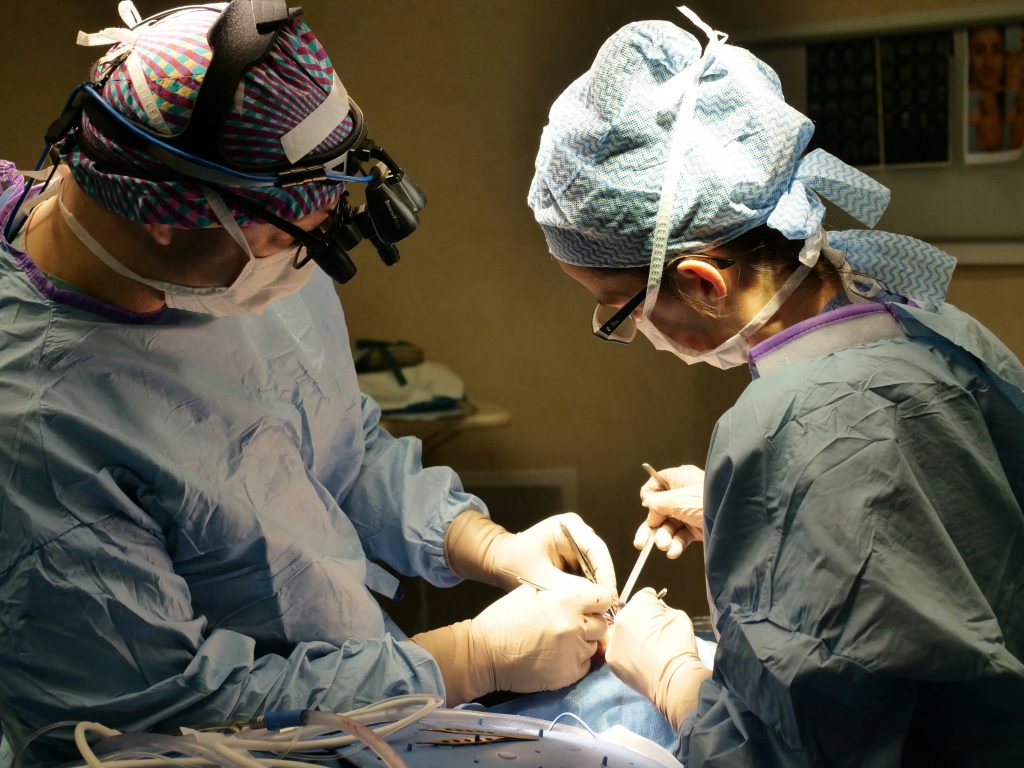
Why Console Work Causes Fatigue
Robotic surgery requires a unique combination of precision, focus, and sustained stillness. Unlike open or laparoscopic procedures, in which surgeons can shift positions more frequently, console work requires the body to remain in a controlled, consistent posture.
Surgeons often lean slightly forward toward the console, aligning their eyes with screens and controls while maintaining hand precision.
Forward head posture during console work places additional stress on the cervical spine, causing tension in the neck, shoulders, and upper back. Without support, muscles work continuously, leading to fatigue that worsens over time.
Console work limits natural movement. In traditional surgery, you can shift, stretch, or briefly reposition during less critical moments. At the console, you must stay focused and move only to maintain precision. This increases strain on static postural muscles.
NekSpine provides stable cervical support, helping reduce this muscle load. By supporting the head and encouraging a more neutral alignment, the device reduces the continuous effort required to maintain posture. This allows surgeons to remain more comfortable while still maintaining full control of their movements and focus during surgery.
Supporting Steadiness Without Limiting Motion
Robotic surgery requires fine motor control and steady vision. Surgeons must hold their head steady for optimal viewing and use precise hand and arm movements to control instruments. Any ergonomic solution must be supported without restricting movement or disrupting workflow.
NekSpine is designed with this balance in mind. The support is gentle and consistent, offering a stable point of alignment without locking the surgeon into a rigid position. Surgeons can lean into the support when needed or maintain light contact depending on their comfort level. This flexibility ensures the device works with the surgeon’s natural movements rather than against them.
Because the support reduces neck strain, it also helps improve overall body relaxation. When the neck and shoulders are less tense, the upper body can remain more stable and efficient during fine motor tasks. This contributes to steadier performance during long, complex robotic procedures.
The goal is not to change how surgeons operate, but to reduce the physical effort required to maintain posture during surgery. This allows surgeons to focus fully on precision work without being distracted by discomfort or fatigue building in the background.
The Importance of Adjustability
Every surgeon has a unique body structure, working preference, and console setup. Some surgeons naturally sit more upright, while others lean slightly forward depending on visual comfort and instrument control. Console height, monitor position, and seating configuration can also vary significantly between operating rooms.
Because of these differences, a fixed support system cannot effectively accommodate every user. NekSpine is designed to be fully adjustable, allowing each surgeon to tailor the support to their individual posture and working environment. This customization allows the device to align with natural body mechanics rather than forcing the surgeon to adapt to the equipment.
Adjustability is especially important during robotic surgery because even small changes in head angle or seating position can affect comfort during long procedures. By enabling precise positioning, NekSpine helps surgeons maintain a consistent, neutral posture throughout the case.
This adaptability also makes the device practical across different surgical environments. Whether moving between operating rooms or adjusting to different console setups, surgeons can quickly modify NekSpine to maintain ergonomic support without interrupting workflow.
Reducing Fatigue During Long Procedures
Fatigue during robotic surgery is often due to the sustained static posture rather than physical exertion. Even though surgeons are seated, the muscles of the neck and upper back remain continuously active to support the head and maintain alignment. Over time, this creates a gradual buildup of tension that can affect both comfort and performance.
NekSpine helps reduce this strain by providing external support for the cervical spine. When the head is supported, the muscles do not need to work as intensively to maintain position. This allows for greater relaxation of the upper body while preserving proper alignment.
As fatigue decreases, surgeons are better able to maintain focus and precision throughout the procedure. The reduction in muscular effort also contributes to improved endurance, especially during longer cases or when multiple procedures are performed on the same day.
In addition to continuous support, NekSpine also enables brief micro-recovery during natural workflow pauses. Even brief reductions in muscle load can help reset tension and improve comfort without disrupting surgical focus.
Benefits Beyond the Console
The impact of consistent ergonomic support extends beyond individual procedures. Repeated strain from long hours at the console can contribute to chronic discomfort in the neck, shoulders, and upper back. Over time, this can affect both daily comfort and long-term career sustainability.
By supporting a healthier posture during robotic surgery, NekSpine helps reduce the cumulative stress placed on the musculoskeletal system. This encourages better long-term alignment habits and helps prevent the gradual development of chronic tension patterns.
Consistent ergonomic support can lead to reduced end-of-day soreness, better recovery between cases, higher energy levels, and improved comfort.