
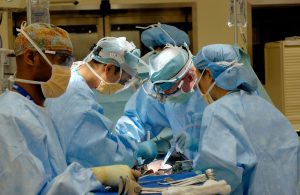
Invasive procedures, whether surgical or dental, demand sustained precision, concentration, and physical endurance. Surgeons stand for hours over the operative field. Dentists and hygienists spend full days leaning forward into small, visually restricted areas.
Both environments require stillness, fine motor control, and a posture that doesn’t always support the body’s natural alignment.
What these two professions share is simple: high-focus, head-down work that puts a significant load on the neck and upper spine. And as procedures become more complex and expectations rise, clinicians are paying the price through increased strain, fatigue, and long-term musculoskeletal stress.
This guide explains why these procedures create so much strain, how NekSpine integrates seamlessly into surgical and dental workflows, and why cervical support is becoming a core component of modern surgical ergonomics and a powerful tool for reducing neck load across clinical fields.
Curious how NekSpine feels during real procedures? Check out our website to see insights from real surgeons and dentists and experience the difference firsthand.
After comparing every major ergonomic tool used in clinical settings, here’s the real answer:
 Chairs and stools
Loupes
OR positioning
Posture reminders
These are valuable, but they do not reduce cervical load.
Wearable cervical support systems
Devices engineered to offload gravitational force
Choosing the Right Solution for Your Needs
If your goal is:
Then, positioning tools and standard ergonomic equipment go a long way.
But if your goal is:
Then, only a cervical support system provides the targeted level of support.
At the end of the day, the device that matters most is the one that most directly affects the forces acting on your body. Engineers designed NekSpine with that exact purpose in mind: to support clinicians through long, demanding, static procedures by reducing the load that causes pain, fatigue, and long-term damage.
If you’re ready to feel the difference and experience real cervical support during your next procedure, we’re here to help.
Book your personalized NekSpine fitting and discover what true neck load reduction feels like. Learn more about Nekspine’s work for surgeons and dentists.
Open abdominal surgeries, spinal procedures, vascular exposures, trauma operations, and thoracic work often require long periods of fixed positioning. NekSpine reduces the muscular effort required to maintain these positions.
Surgeons often begin a case in perfect posture. Ninety minutes in, fatigue leads to subtle collapses, forward drift, rounded shoulders, and increased head tilt. NekSpine reduces this progression by providing consistent support throughout the case.
Surgeons need stability without restriction. NekSpine supports the cervical spine without limiting arm movement, torso rotation, or surgical freedom.
By reducing physical strain, surgeons maintain steadiness and concentration longer, which is essential for delicate dissection, suturing, or long reconstructive work.
NekSpine is designed to complement ergonomic loupes and optimized table height rather than compete with them. It fills the gap that those tools cannot: active cervical load reduction.
This makes it suitable for general surgeons, plastic surgeons, ENT surgeons, vascular surgeons, orthopedic surgeons, and oral-maxillofacial surgeons, as well as any specialty that relies on precise, sustained head-down alignment.
Dentistry shares many ergonomic challenges with invasive surgical work, but it is applied all day, every day. The operator’s head is often flexed between 25° and 45° while performing:
Even with improved stool design, magnification loupes, and better operatic ergonomics, the neck still bears the brunt of the work. NekSpine steps in when dentists and hygienists need it most.
Dental procedures require being extremely close to the patient’s oral cavity. NekSpine supports the neck while allowing the head to tilt forward naturally, without strain.
Instead of forcing the clinician to “correct posture,” NekSpine reduces the gravitational load on the cervical spine, making extended appointments less taxing.
Hygienists often perform back-to-back scaling appointments lasting several hours. NekSpine reduces the cumulative fatigue that contributes to chronic pain.
It is effective for dentists in any position and with any operatory layout.
Dental clinicians face some of the highest MSK injury rates in healthcare. NekSpine provides a way to protect the cervical spine without interrupting clinical efficiency.