What Surgeons in Beijing, London, and Minneapolis Found

International Clinical Perspectives on NekSpine
The case for evaluating NekSpine rests on two distinct but complementary lines of information: peer-reviewed research conducted under documented study conditions with identifiable methods and results, and the perspectives of named surgeons who use the device in their own practice. These are different kinds of evidence and should be understood as such. The peer-reviewed studies provide objective measurement data under defined conditions. The surgeon perspectives provide real-world practice context that the studies alone cannot capture. Together they offer a more complete picture than either provides alone. Contact NekSpine to schedule a free trial and evaluate what both lines of information describe in your own operative environment. Individual results will vary.
What the Peer-Reviewed Evidence Shows
The NekSpine Mayo Clinic study, Annals of Surgery, 2025, evaluated NekSpine across twelve surgeons in six surgical specialties during actual operative procedures. The study reported a 56% increase in static endurance time, a 41.7% reduction in neck and shoulder discomfort at 45 degrees of flexion, and a 91.7% device acceptance rate. The study also reported that the device minimally interfered with surgeons’ ability to perform surgery and did not compromise range of motion across any of the six specialties evaluated. Individual results will vary.
The University of Alberta / EWI Works, Sensors, 2026 evaluated NekSpine using wearable electromyography sensors across multiple neck-flexion angles during tasks designed to mimic surgical demands. The study reported up to a 31 percent reduction in neck muscle activity, up to a 50 percent reduction in perceived neck discomfort, and a 55 percent increase in endurance time. The study also evaluated performance with headlight use at forty-five degrees of neck flexion and found that the device effect was maintained when head-mounted optical equipment was worn simultaneously. Individual results will vary. Both studies are available in full through our clinical evidence page.
These two studies were conducted independently, used different methodologies — one in actual operative environments with clinical outcome measures, the other in a simulated environment with objective EMG measurement — and reported findings in the same direction. The biomechanical basis for those findings is described by Hansraj KK, Surg Technol Int, 2014, which documented that forward head tilt of forty-five degrees generates a reported forty-nine pounds of effective load on the cervical spine, and by Gorce & Jacquier-Bret, International Journal of Environmental Research and Public Health, 2023, which documented musculoskeletal disorders among the leading occupational health concerns across the surgical workforce in a worldwide meta-analysis.
What Named Surgeons Using NekSpine Are Reporting
The following perspectives are drawn from named surgeons whose feedback is published on the NekSpine Surgeon Insights and Experiences page. These are surgeon-reported experiences, not documented clinical evaluations with identifiable methods and results. They are presented here as practice context that complements the peer-reviewed evidence, not as a substitute for it.
-
Dr. Philip Haigh, Oncologic and Endocrine Surgery, described the device as invaluable, noting that it allows him to get through a long operative day by reducing work-related neck pain, that he wears it for every open case, and that he highly recommends trialing it
-
Dr. Dan Kim reported that using NekSpine one hundred percent of the time has reduced the need for breaks between cases, allowed him to be more productive and get through his workload faster, and left him pain-free at the end of the day
-
Dr. John de Graft-Johnson described the device as fitting seamlessly into his workflow and effectively reducing the pain and discomfort he previously experienced
-
Dr. Zachary Brewer described saying goodbye to chronic back and neck pain and noted that NekSpine has improved his quality of life by allowing him to perform surgeries without lingering pain
These are individual surgeon perspectives. They are not representative of all users, and individual results will vary. The full set of surgeon perspectives is available on the Surgeon Insights and Experiences page.
Why Both Lines of Information Matter for Surgeons and Institutions Evaluating NekSpine
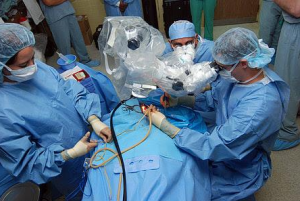
What Peer-Reviewed Evidence and Surgeon Perspectives Each Contribute
For a surgeon evaluating NekSpine, the peer-reviewed studies answer a different question than the surgeon perspectives do. The studies describe what objective measurements found under defined conditions—EMG-measured muscle activity reduction, endurance time changes, and surgeon-reported discomfort scores. The surgeon perspectives describe what individual surgeons report in the context of their actual practice — how the device integrates into workflow, how it feels across a full operative day, and what its effect on pain and fatigue has been for them personally. Neither replaces the other. A surgeon who wants to understand what the device does under documented conditions should read the peer-reviewed studies. A surgeon who wants to understand what using it actually feels like across a clinical day will find the surgeon perspectives more directly relevant. For institutions evaluating NekSpine for procurement, both lines of information support the case for a structured pilot evaluation that generates data specific to the institution’s own surgical staff and case mix. The hospital pilot execution kit provides the framework for that evaluation. Contact NekSpine to request it.
The Strongest Basis for Evaluating NekSpine Is Your Own Trial in Your Own Operative Environment
The peer-reviewed evidence describes what was found in documented study conditions. The surgeon perspectives describe what individual surgeons report in their own practice. Neither tells a surgeon or institution what NekSpine will provide in their specific operative environment, with their specific case mix, for their specific surgical staff. That question is what the free trial is designed to answer. Two independent, peer-reviewed studies and a growing number of named surgeon perspectives point to a consistent general direction. The trial determines whether that direction holds in your practice. Schedule a free trial through our contact page, or review the full peer-reviewed evidence and surgeon perspectives on our clinical evidence page. Individual results will vary.