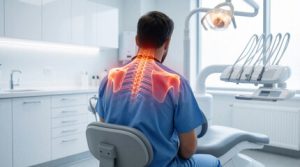
Does Robotic Surgery Solve Neck Strain? What Console Surgeons Report

Robotic surgery moves the surgeon from the bedside to a seated console. It is easy to assume that solves the ergonomics problem. The surveys tell a more mixed story. Many console surgeons still report neck, shoulder, and back symptoms, and the research points to console posture and settings as part of the reason.
Working at a robotic console?
NekSpine® is designed to work in seated positions and at robotic consoles.
What Robotic Surgeons Report
One of the largest ergonomic surveys of robotic surgeons collected responses from 432 surgeons who regularly perform robotic surgery. Of those, 56.1% reported physical symptoms or discomfort. Neck stiffness, finger fatigue, and eye fatigue were among the most common symptoms. Neck symptoms did not improve significantly with the newest robotic system, and lower back stiffness was more common among surgeons with higher annual robotic case volumes (Lee et al., Surgical Endoscopy, 2017).
A later multinational survey of robotic surgeons found the same pattern. The neck, shoulders, and back were the most commonly affected areas, and the authors linked those symptoms to the ergonomic design of the surgeon console (Patel et al., Journal of Robotic Surgery, 2023). The same survey found that surgeons considered the console more comfortable than conventional surgery. In other words, robotic surgery may be an improvement, but it doesn’t remove the problem.
Why the Console Still Loads the Neck
Sitting down changes the posture, but both surveys point to the console itself as part of the problem. Patel and colleagues tied the neck, shoulder, and back symptoms to the console’s ergonomic design (Patel et al., 2023). In the Lee survey, surgeons who felt confident in their ergonomic setup and considered it valuable reported fewer symptoms.
The authors concluded that surgeons may need training in how to optimize those settings (Lee et al., 2017).
Practical Steps at the Console
- Learn your console’s ergonomic settings. The Lee survey linked confidence with those settings to fewer symptoms.
- Set the console up for yourself. Adjust it at the start of each case instead of working with the last user’s settings.
- Watch your case volume. In the Lee survey, lower back stiffness rose with annual robotic case volume.
- Track symptoms over time. Eye symptoms in that survey were more common among surgeons with more years in practice, so problems can build gradually.
Where NekSpine Fits
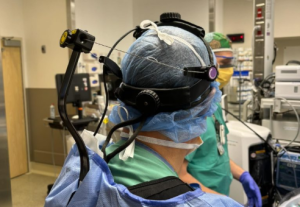
NekSpine is a wearable carbon fiber support system that weighs less than 2 lbs. Its support beam counterbalances the weight of the head, and its vest provides lumbar support. It is designed to work in seated positions and at robotic consoles, as well as with loupes, headlights, and microscopes for open cases. For surgeons who move between robotic and open procedures, NekSpine may offer compatibility across both settings, according to the manufacturer. However, the cited peer-reviewed studies did not evaluate its use at robotic consoles, so those studies have not established its effectiveness in robotic surgery.
NekSpine has been evaluated in two peer-reviewed studies, including a study of 12 surgeons across six specialties who reported significantly less neck and shoulder discomfort with the device (Kim et al., Annals of Surgery, 2026). Both studies are small, and both are summarized on the Clinical Evidence page.
Try NekSpine at your console.
Book a trial, or ask about a pilot for your robotic program.